
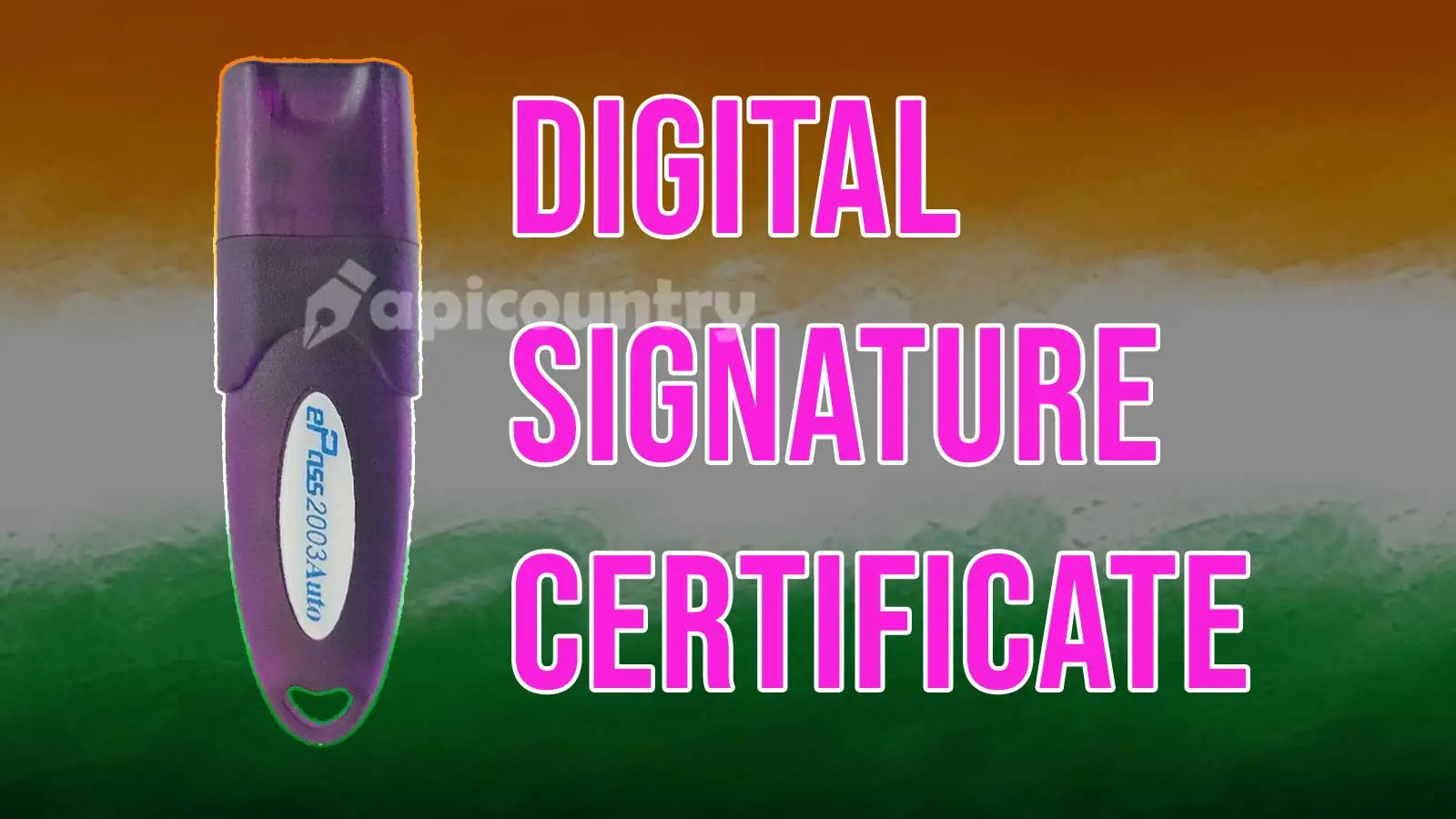
Earlier, Class 2 and Class 3 Digital Signature Certificates (DSCs) were the two most widely used categories. Therefore, users often found it difficult to decide which certificate to choose. However, this distinction no longer applies because Class 2 DSC has been discontinued.
Since 1 January 2021, Class 3 Digital Signature Certificates (DSCs) have been the only category available for most government, statutory, and business-related transactions.
The Controller of Certifying Authorities (CCA) introduced these classifications to define different security levels and usage permissions. However, Class 3 DSC has now become the standard certificate for almost all applications.
Class 2 Digital Signature
- It was the second level of certificate and without critical security configuration.
- It was commonly used for all general-purpose signing.
- IT return filing, GST filing, Company registration, Trademark registration, ROC filing, Contractor tender, IRCTC, and EPF use were some major uses of this certificate.
- It was cheaper compared to Class 3 DSC.
- A class 2 certificate could not be used in place of a class 3 certificate.
- Note: Class 2 DSC is discontinued now. You need to use Class 3 DSC in place of Class 2.
Class 3 Digital Signature
- It is the highest level of certificate and comes with a higher security configuration.
- It is mostly used for E-tender and E-auction purposes. Some categories of Trademark and Patent registration are also needed in class 3 DSC for submitting an application.
- One can use it in all places where Class 2 DSC is accepted.
- Cost is higher compared to Class 2 DSC price.
- Apply for class 3 DSC online in just 30 minutes.
Types of Class 3 DSC
Currently, Class 3 DSC is available in two variants:
Sign Only : Users can digitally sign documents, forms, and applications.
Combo (Sign + Encrypt): Users can both sign and encrypt documents for additional security and confidentiality.
Additional Information
- Class 3 DSC validity ranges from 1 to 3 years.
- Applications may require mandatory Video KYC verification.
- Applicants may need Aadhaar, PAN, and supporting documents depending on the applicant category.
- Organizations may need to provide additional authorization documents.
IMPORTANT: Furthermore, we have made the DSC application process completely paperless. Therefore, applicants do not need to submit any physical documents, as verification takes place online through Aadhaar, PAN, Video KYC, or other digital verification methods, subject to Certifying Authority requirements.
DSC requirements, portal acceptance policies, and verification procedures may change from time to time. Therefore, users should verify the latest requirements before applying for a Digital Signature Certificate.
Apply for Class 3 DSC online and complete the verification process as per the latest guidelines.
Thanks for sharing up–to-date on this subject! I find it is very informative and very well written one! Keep up on this quality!
Thanks for posting this article. Article was written nicely. it’s full of content and informative too.